ElevenLabs vs Descript Voice Cloning: I Put Them Through 6 Tests
Last updated: July 2026
Author: Greg Preece — I test AI video and voice tools hands-on so creators can find the absolute best options for their production workflows.
If you are a creator looking to scale your content using an AI voice clone, you have probably narrowed your choices down to ElevenLabs and Descript. I put both of these platforms' voice cloning features through a rigorous, side-by-side showdown using six distinct speech challenges. Here is exactly how they compared in realism, emotion, timing, and vocal match.
[ElevenLabs](/articles/best-ai-voice-generator-for-freelance-voiceover-work) vs Descript Voice Cloning: The Quick Verdict
If you only have a minute, here is the high-level summary of how the two platforms stacked up during my hands-on testing:
| Test Challenge | ElevenLabs Winner? | Descript Winner? | Key Observation |
|---|---|---|---|
| 1. Voice Similarity | Yes | No | ElevenLabs captured the unique timbre and tone of my voice significantly better. |
| 2. Pronunciation | Tie | Tie | Both handled complex homographs flawlessly. |
| 3. Punctuation | No | Yes | Descript offered more natural timing around commas and better tonal shifts. |
| 4. Realism | Yes | No | ElevenLabs captured conversational surprise and fillers with far more authenticity. |
| 5. Humor | Yes | No | ElevenLabs nailed the comedic timing and emphasis; Descript sounded too robotic. |
| 6. Emotion | No | Yes | Descript slightly edged out ElevenLabs on expressing genuine pride, though both were close. |
The Bottom Line: If your priority is generating hyper-realistic, human-sounding voiceovers from scratch, ElevenLabs is the clear winner. However, if you are a podcaster or video creator editing timeline audio via text, Descript remains incredibly useful for fixing quick voice mistakes.
Prefer to watch? Here's the video. Prefer to skim? The full breakdown is below.
Quick Links to the Tools
- ElevenLabs: Try it here: Try ElevenLabs →
- Descript: Try it here: Try Descript →
Table of Contents
- The Core Differences: ElevenLabs vs. Descript
- Test 1: Voice Similarity (Vocal Match Accuracy)
- Test 2: Pronunciation (Homographs)
- Test 3: Punctuation (Pauses and Tone)
- Test 4: Conversational Realism (Filler Words)
- Test 5: Humor (Comedic Timing)
- Test 6: Emotional Expression
- Deep Dive: ElevenLabs Voice Cloning
- Deep Dive: Descript Voice Cloning
- Final Verdict: Which Voice Clone Should You Choose?
- Frequently Asked Questions
The Core Differences: ElevenLabs vs. Descript
Before jumping into the audio tests, it is important to understand that these two programs approach voice cloning from entirely different product philosophies:
- ElevenLabs is a dedicated AI voice generator and text-to-speech platform. It is built to create ultra-realistic custom voice models, translate content into multiple languages, and generate high-fidelity standalone voiceovers.
- Descript is an all-in-one, text-based video and audio editing suite. Its voice cloning feature, historically known as Overdub, is designed to let you edit your existing recordings simply by typing corrections into your transcript.
I tested both platforms using their Creator plans to see how they perform in action — here is what every Descript plan actually costs. Let's look at the tests.
Test 1: Voice Similarity (Vocal Match Accuracy)
To test how closely each clone resembles my actual speaking voice, I had both tools generate a baseline sentence:
"So, this is [Platform Name] speaking now, and this is the sentence that each voice clone is going to say so that we can test how similar each clone sounds to my voice."
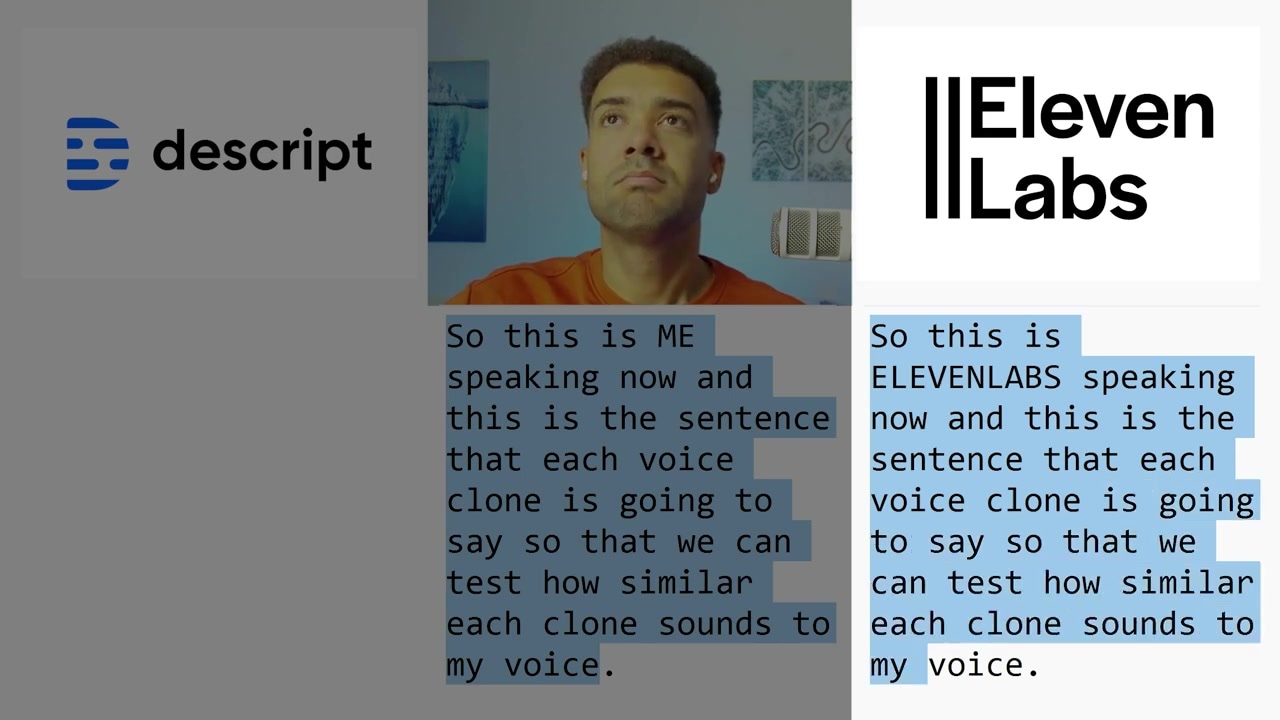
Caption: Setting up the initial voice models to test the overall similarity against my raw recording.
My Finding: To me, there was a night and day difference. ElevenLabs sounded vastly more similar to my natural voice. Descript's clone lacked the unique resonance and warmth of my speaking style, leaving it sounding a bit detached.
Winner: ElevenLabs
Test 2: Pronunciation (Homographs)
A great voice clone needs to be smart enough to pronounce words that are spelled the same but pronounced differently depending on the context. I gave both platforms this script:
"They tried to desert the army in the middle of the desert, but the heat was unbearable. After a quick read, they realized they had already read that book."
This script contains two homograph pairs: "desert" (abandon) vs. "desert" (arid land), and "read" (present tense) vs. "read" (past tense).
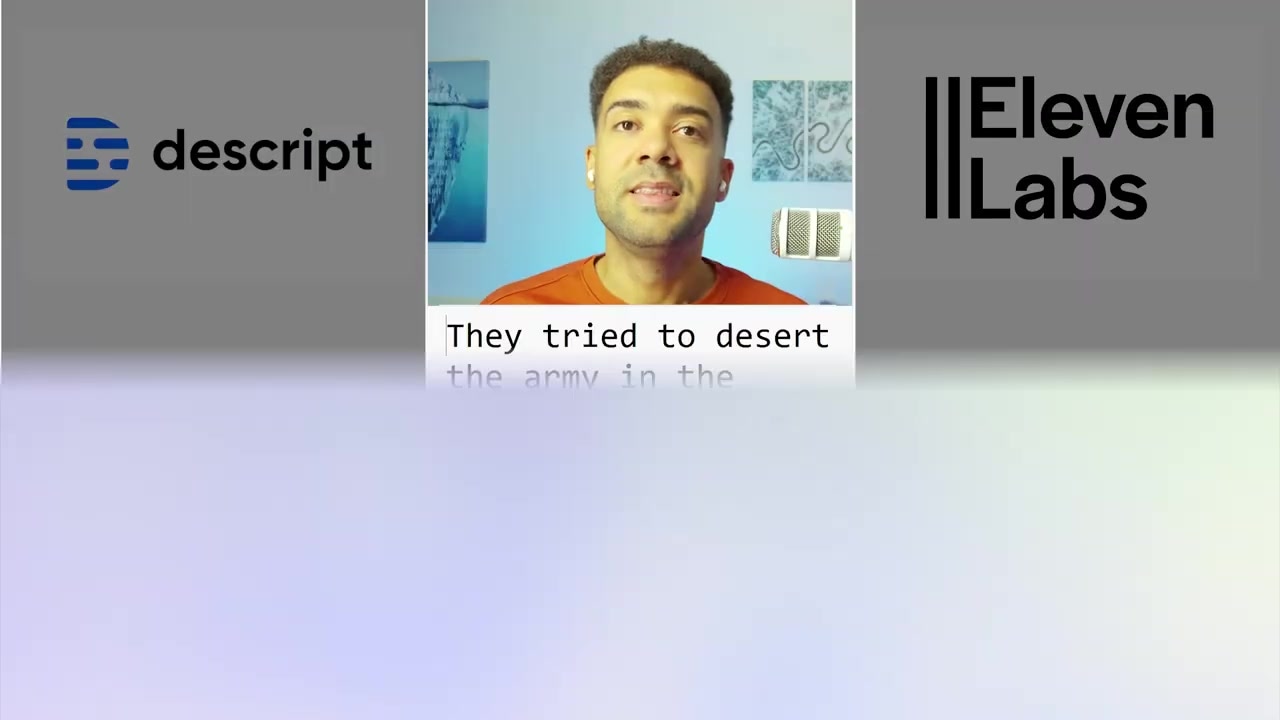
Caption: Inputting complex homographs to see if the AI engines correctly distinguish words that are spelled identically.
My Finding: Both platforms passed this test with flying colors. Each AI correctly identified the context clues and shifted pronunciation exactly where they needed to.
Winner: Tie
Test 3: Punctuation (Pauses and Tone)
Punctuation is about more than just spacing; it determines how an AI uses pauses and shifts its tone. I used this dramatic script:
"Are you going to the party tonight? No. Wait, are you seriously going to cancel at the last minute?"
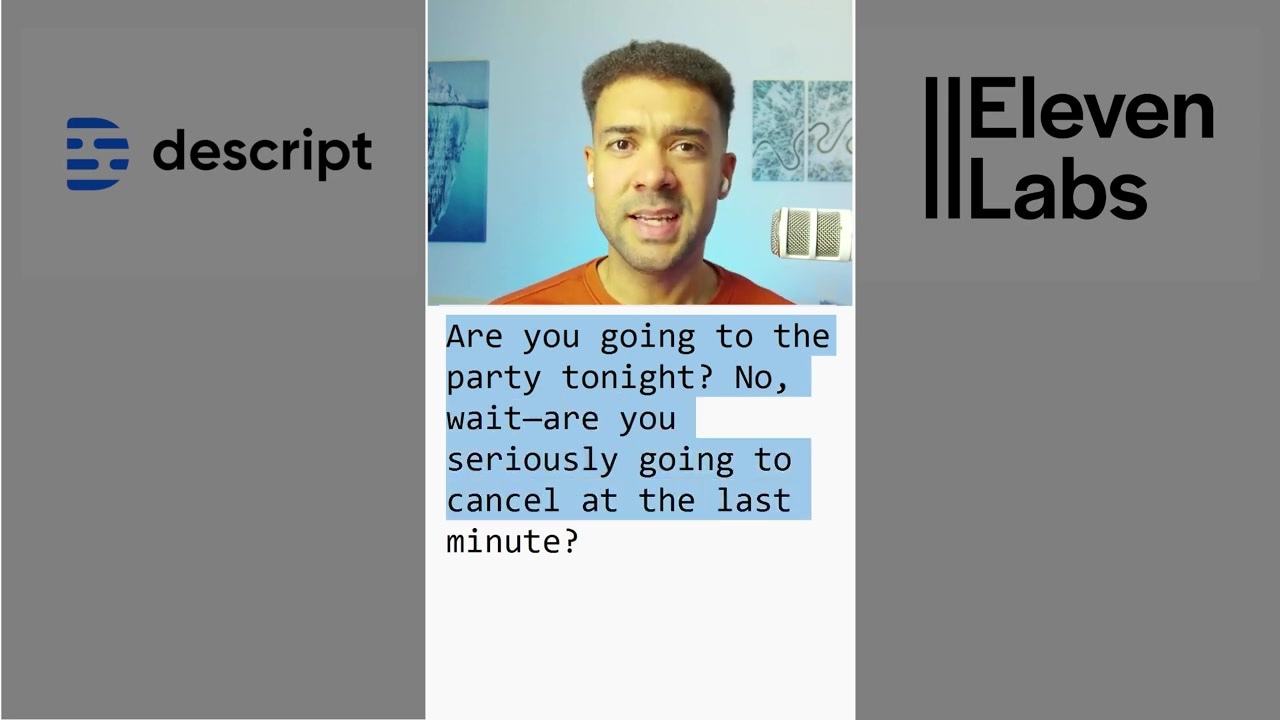
Caption: Reviewing how commas and question marks impact the natural cadence of the generated audio.
My Finding: Descript handled punctuation better in this round. There was a more natural, realistic pause around the commas and periods. Furthermore, Descript's voice clone successfully injected a sense of concern and incredulity into the final question, whereas ElevenLabs sounded somewhat flat and monotone here.
Winner: Descript
Test 4: Conversational Realism (Filler Words)
Real human speech is messy. It contains sudden exclamations, pauses, and filler words like "um" or "uh." I tested both platforms with this script:
"Yikes! That was close. Um, do you think we should try again?"
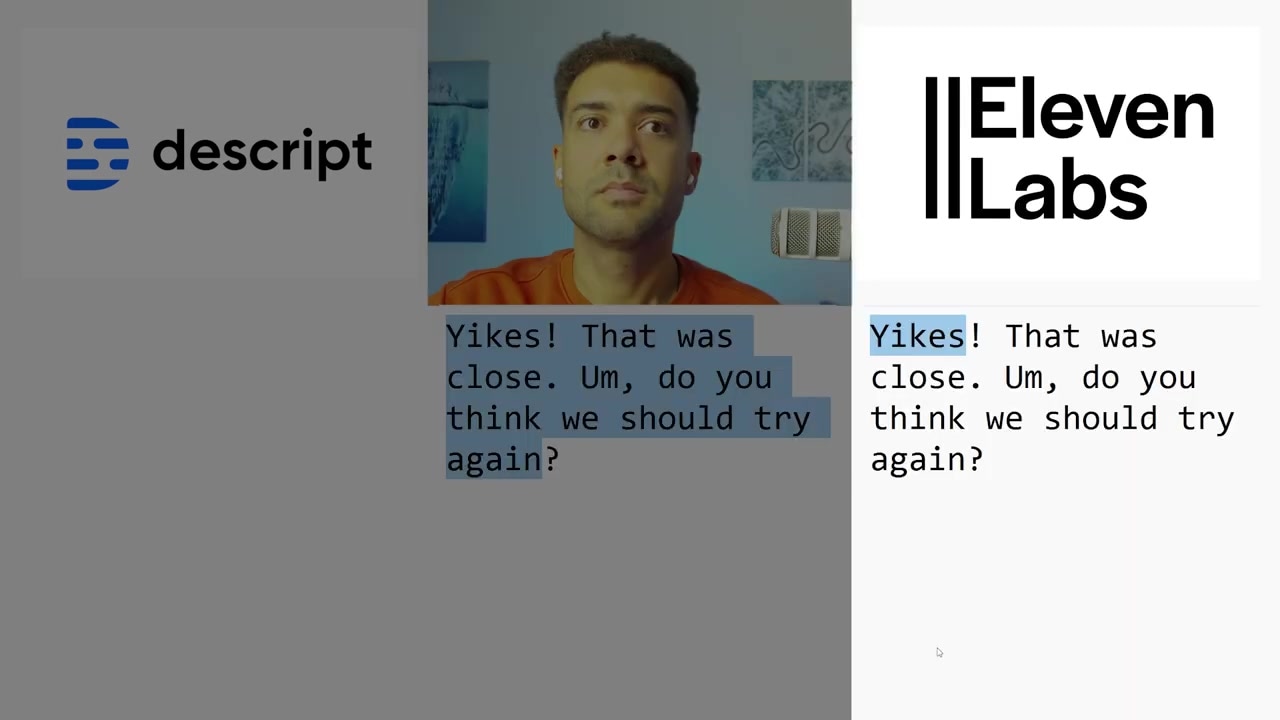
Caption: Testing conversational fillers and sudden emotional outbursts to see which clone sounds less "perfect" and more human.
My Finding: ElevenLabs took this round easily. The opening "Yikes!" carried a genuine sense of surprise and alarm. In contrast, Descript's delivery felt flat, flat-lining the emotional peak and making the entire sentence sound overly scripted.
Winner: ElevenLabs
Test 5: Humor (Comedic Timing)
Jokes rely entirely on execution, pauses, and emphasize-on-demand delivery. I attempted to clone my delivery of a classic cheesy joke:
"Why did the scarecrow win an award? Because he was outstanding in his field!"
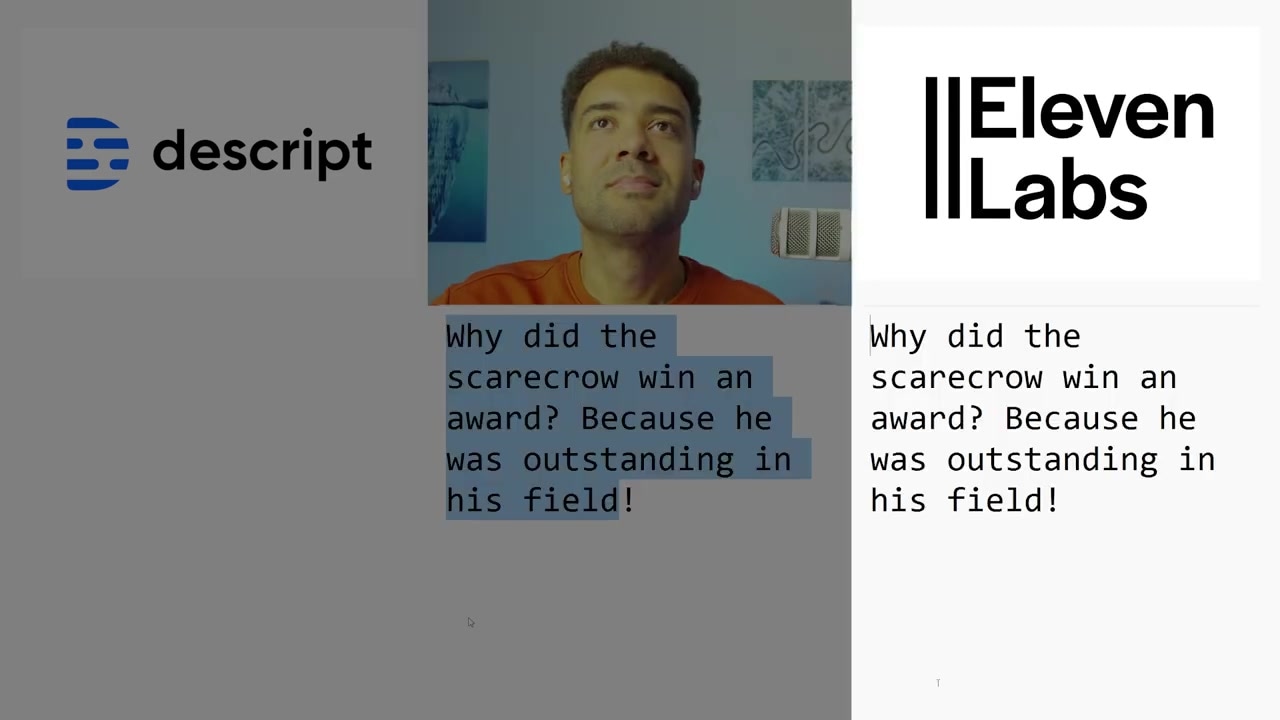
Caption: Looking at how each clone handles the build-up and punchline delivery of a joke.
My Finding: ElevenLabs hands-down delivered the better joke. It felt incredibly human and actually seemed to put a slight, natural emphasis on the punchline word "outstanding." Descript, unfortunately, completely flattened the joke, resulting in a robotic delivery.
Winner: ElevenLabs
Deep Dive: ElevenLabs Voice Cloning
ElevenLabs is arguably the best AI voice cloning software on the market if your primary goal is generating realistic speech from scratch.
Try it here: Try ElevenLabs →
Who It Is For
ElevenLabs is ideal for creators, audio engineers, and localizers who need a standalone voice cloning platform. If you are generating long-form narrations, audiobooks, or creating consistent character voices from scratch, this is your best option.
How to Clone Your Voice with ElevenLabs (High-Level Steps)
- Upload Your Audio: Provide a clean, high-quality audio file of your voice (the cleaner the audio, the better the clone).
- Configure Settings: Navigate to the Voice Lab and select your cloned voice profile.
- Write Your Script: Enter your text directly into the text-to-speech editor.
- Generate and Refine: Hit generate, then tweak the stability and clarity sliders to fine-tune the delivery.
Deep Dive: Descript Voice Cloning
Descript takes a massive editing workflow and condenses it into a single document-style workspace.
Try it here: Try Descript →
Who It Is For
Descript is built primarily for podcasters, YouTubers, and video editors who need an all-in-one editing tool. The primary value of Descript's voice cloning (Overdub) is the ability to correct mistakes. If you misspeak during a recording, you can simply type the correct word in your text transcript, and Descript will automatically patch it using your voice clone.
How to Clone Your Voice with Descript (High-Level Steps)
- Record a Verification Script: Read a verification statement out loud to verify ownership of your voice.
- Train the AI Speaker: Descript will process your voice to build a dedicated digital speaker profile.
- Use the Write Tool: Highlight any text in your project script and replace it with new typed text to let the Overdub engine generate matching audio seamlessly.
Final Verdict: Which Voice Clone Should You Choose?
When comparing all the tests side-by-side, ElevenLabs is the overall winner for pure sound quality and human-like expression. Descript has a tendency to sound too robotic across diverse conversational scripts, whereas ElevenLabs consistently captures the subtle nuances, timber, and cadence of natural human speech.
However, your choice should ultimately depend on your workflow:
- Choose ElevenLabs if you want the highest-quality, most realistic AI voiceovers and need a dedicated text-to-speech generator.
- Choose Descript if you are already using their platform to edit your podcasts or videos and want a fast, convenient way to correct audio mistakes without having to re-record.
Frequently Asked Questions
Can I clone my voice for free on these platforms?
Both Descript and ElevenLabs offer trial options on their free accounts. However, to access advanced voice cloning models and unlock higher character limits, you will need to upgrade to a paid subscription (such as the Creator plan, which I used for both tools in this comparison).
How much audio do I need to record to get a good clone?
While some platforms allow you to create a quick clone with just a minute of audio, the rule of thumb remains: the more clean, high-quality audio data you provide, the more realistic and similar your voice clone will sound to your actual voice.
Is voice cloning safe to use?
Yes, provided you use reputable platforms like ElevenLabs and Descript. Both companies require strict verification steps—such as recording a live verification statement—to ensure you only clone your own voice or voices you have explicit permission to use.